Snorkelling in Cozumel: Which Reef Trip Actually Gets You There
Updated September 24, 2026 · 7 min read
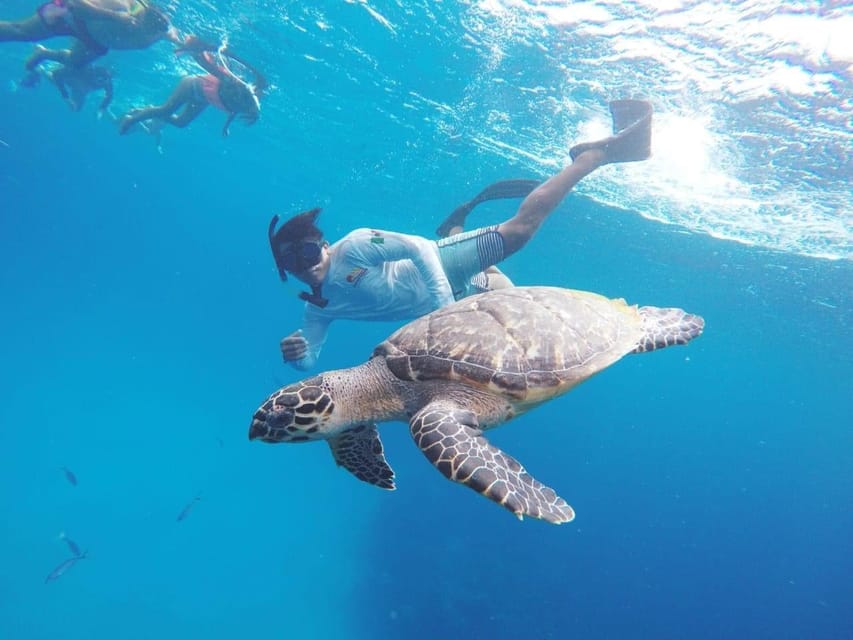
Snorkelling is not one of the things you can do in Cozumel. It is the island’s main business: 101 of the 189 listings in our inventory involve it, against 15 for scuba diving. That imbalance shapes everything about how a snorkelling day here works.
The reason is geography. The reefs lie offshore along the sheltered western side of the island, in the channel between Cozumel and the mainland. You do not walk into them from a beach – with a couple of exceptions further down this page, you get on a boat.
The three names you will see on every itinerary
Almost every trip sells some combination of the same three stops, and they are not three of a kind.
Palancar is the real reef: a long complex of coral heads and sand channels off the south-west coast, deep enough that a snorkeller sees the top of it from above rather than swimming through it. This is where the “giant corals” in the listings actually are.
Columbia sits further south and is the quieter of the two reefs. Fewer boats, the same kind of structure.
El Cielo is not a reef at all. It is a shallow sandbar – waist-deep, pale sand, famously covered in red cushion starfish – and the water there is turquoise because there is nothing but sand underneath. People are sometimes disappointed by this after being sold it as a highlight. Go for what it is: a stand-up-in-the-Caribbean stop, not a fish-watching one.
The starfish are the reason El Cielo needs a warning. Picking one up, or lifting it clear of the water for a photograph, is prohibited under Mexican environmental law and can be fined. It is also lethal: the animals take up oxygen across their body surface, and a starfish held in the air can die from it even after being put back. Guides who let it happen are risking their own permits. Look, do not lift.
The current does the swimming
Cozumel is drift country. The current along the west coast runs broadly from south to north, and boats work with it rather than against it: you go in at one end of a site, you are carried along it, and the boat picks you up further on. Nobody is expected to swim back to where they started.
That is worth knowing for two reasons. It makes the snorkelling itself easy – you float and look. And it means the group stays together because the water moves it, so a guide who asks you not to swim off sideways is not being fussy.
What a trip costs, and what it does not include
The standard half-day is four hours and around €48. The 3 Reefs Boat Tour with drinks takes in Palancar, Columbia and El Cielo, runs 4 hours from €47.83 and holds 4.4 stars from 1,476 reviews – by a wide margin the most-reviewed snorkelling trip on the island. A Palancar, Columbia and El Cielo trip with a much smaller review count runs the same route for the same money at 4.5 stars.
Paying more buys food rather than reef. The El Cielo and Palancar trip with drinks and ceviche is €62.64 for 4 hours 30 minutes and sits at 4.1 stars from 325 reviews – two stops instead of three, with lunch in the water.
Paying much less buys a shorter leash. The cheapest snorkelling trip on the island is a reefs-plus-El-Cielo trip at €12.53, and its rating is 3.8 from 137 reviews – the lowest of any snorkelling trip on the island with more than a hundred reviews. Some people have a fine morning on it. We would not send a nervous swimmer.
The marine park fee is separate, and people are caught by it. The reefs lie inside Parque Nacional Arrecifes de Cozumel, and everyone who enters the water pays a daily fee per person. Operators currently quote around 225 pesos, roughly 13 US dollars; the figure rose sharply in 2025 and is not usually inside the ticket price. It is collected at the marina at check-in, in pesos or dollars, cash or card. Ask when you book rather than at the dock, and take small notes.
The park rules are stricter than most people expect
They are posted, they are federal law, and they are enforced against the operator as well as the guest:
- No standing on or holding onto coral.
- No collecting or disturbing anything alive – fish, shells, starfish included.
- No feeding the fish. If a guide is feeding them, you are on the wrong boat.
- No gloves or knives unless you are a registered dive professional. This one surprises visitors, and the reason is exactly the rule above it: gloves make it easy to grab things.
- No non-biodegradable sunscreen. Buy reef-safe at home, or go covered – a T-shirt you can swim in solves it and does not wash off.
When the water is good, and when the port shuts
The clear half of the year runs from roughly late winter into early summer. From November to February, cold fronts – nortes – sweep down the channel, and when one arrives the harbourmaster can close the port. That closure is not negotiable: boats do not sail, and trips are cancelled at short notice regardless of what the sky looks like from your balcony.
Hurricane season officially covers June to November, with the highest risk in September and October. Neither of these is a reason to stay away – they are a reason to book the snorkelling for early in your stay rather than the last morning, and to read the cancellation terms before you pay.
If you would rather not get on a boat
Two honest alternatives.
Shore snorkelling at Chankanaab. The park on the west coast has reef within swimming distance of the beach, and a day pass with snorkelling and the sea lion show is €28.19 for 3 hours. It is a park day, not a wild one, and for anyone uneasy in open water that is the point.
A glass-bottom boat. The VIP glass-bottom and 3-reef tour is 2 hours from €30.74 at 4.6 stars from 224 reviews, and it is explicitly sold for swimmers and non-swimmers together. If one person in the party does not want to be in the water, this is the trip that does not force the issue.
For everything else in the water, the snorkelling tours page lists 101 trips from €12.53. If you hold a certification and want the wall rather than the surface, scuba diving is a separate list of 15 from €52.08.