A Cruise Day in Cozumel: What Actually Fits Between the Gangway and All Aboard
Updated September 24, 2026 · 7 min read
Most people who set foot on Cozumel arrive by ship and leave the same afternoon. That single fact shapes the whole island: the excursions are cut to fit a port call, the taxi fares are fixed, and the restaurants nearest the piers are the ones that know exactly how long you have.
Which means the useful question is not “what is there to do in Cozumel”. It is “what fits, and what will make me miss the ship”.
Three piers, and yours decides your morning
Cozumel has three cruise piers and no tender boats – you walk off. Where you walk off matters more than anything else you will decide today.
Punta Langosta sits in the middle of downtown San Miguel. It is the only pier you can walk off and be in town. Disney, MSC and Norwegian ships typically use it.
The International Pier (Muelle Internacional) and Puerta Maya sit side by side a few kilometres south of town. Royal Caribbean and Celebrity generally use the International Pier, Carnival, Princess and Holland America use Puerta Maya. Both have their own shopping plaza at the end of the gangway, and neither is within a sensible walk of the centre.
Ships change piers, and two ships from the same line can dock at different ones on the same day. The pier is printed on your daily programme – read it rather than assume it.
The taxis have no meters, and that is not a scam
Cozumel taxis work on fixed zone fares, not meters. Downtown from the International Pier is roughly 5 to 8 US dollars; from Puerta Maya, roughly 8 to 12. Agree the fare before you get in, ask whether it is per person or per car – that is the question that causes the arguments – and carry small notes. Dollars are accepted everywhere near the port; pesos usually buy more.
There is no bus network you would want to rely on for a port day. Colectivos run along the west coast road, but not to a timetable you can plan a return around.
The clock is the part that catches people
Quintana Roo stays on the same time all year. It does not use daylight saving.
Your ship may not be on local time at all. Some lines keep the clock of their home port for the whole voyage; others move it to match each stop. During the North American daylight saving months, that difference is exactly one hour – enough to be standing on the pier watching your ship leave.
Three habits fix it:
- All aboard is in ship’s time. So is everything printed in your daily programme.
- Do not trust your phone. It may pick up the local network, it may still be showing home, and it may have moved an hour without telling you.
- Set a watch to ship’s time when you step off and plan the day against that, not against a restaurant’s wall clock.
The other half of the same problem: an excursion you booked yourself does not oblige the ship to wait. Only excursions sold by the cruise line carry that guarantee. Book independently – which is usually better value and smaller groups – and the timing becomes your responsibility. Leave a proper buffer, not fifteen minutes.
What fits in a seven-hour call
Work backwards. A typical call runs from mid-morning to late afternoon. Take an hour off the front for disembarkation and the taxi, an hour off the back for the return and the queue at the gangway, and you have four to five usable hours.
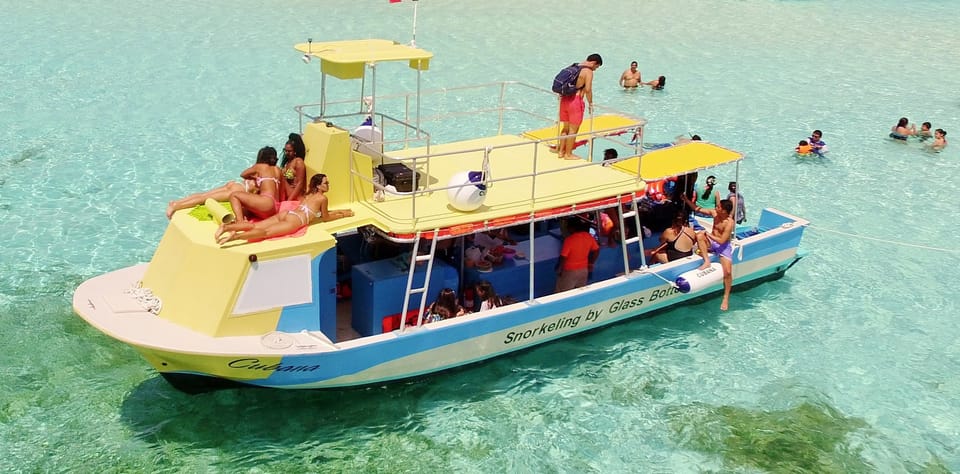
Two hours. The VIP glass-bottom boat and 3-reef tour runs 2 hours from €30.74 at 4.6 stars from 224 reviews, and takes swimmers and non-swimmers on the same boat. The Atlantis submarine is also 2 hours, from €79.06 at 4.7 stars from 142 reviews – it goes to a depth no snorkeller reaches, and nobody gets wet.
Two hours, on land. A lucha libre show with a meet and greet is 2 hours from €40.09 and holds 4.8 stars from 153 reviews. It is the highest-rated thing on this list and the one nobody plans in advance.
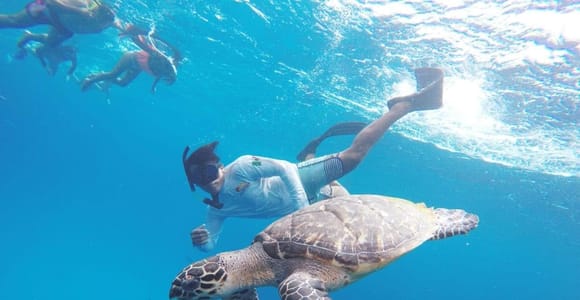
Four hours. The standard reef trip – 3 Reefs with drinks and snorkelling, 4 hours from €47.83 and holds 4.4 stars from 1,476 reviews – fits a normal call, and only just. It is the wrong choice on a short one.
A whole day in one place. A beach club day pass is the least stressful option on the island: San Francisco Beach Club is €17.57 with loungers, pool and snorkel gear included. You are twenty minutes from the pier and you control when you leave.
What does not fit
Chichén Itzá, Tulum, cenotes on the mainland. These are sold in Cozumel because people ask for them, and they mean a ferry to Playa del Carmen, a long coach ride, the site, and all of it again backwards. The ferry crossing alone is around 35 to 45 minutes each way, on top of a two-hour drive at the far end. On a ship-sold excursion it is possible. Independently, on a seven-hour call, it is a bet you should not take.
Anything booked for the last slot of the day. If the boat before yours runs late, you are the one who pays for it.
A hire car for six hours. You can – there are agencies at the piers – but you will spend a chunk of your window on paperwork and the deposit hold, and the island’s one ring road takes two and a half to three hours to drive without stops. That is a holiday plan, not a port-day plan.
If the weather turns
From November to February, cold fronts called nortes come down the channel and the port authority can close the harbour. When that happens, boats do not sail – yours included – and the operator will refund or reschedule under its own terms. Check them before you pay, because a rescheduled tour is worth nothing to a passenger who sails at four o’clock.
To plan a longer stay rather than a day, start with the beach clubs – 53 of them from €17.57 – or with snorkelling, where the island’s real business is: 101 trips from €12.53.